Pain
Waiting
An operator loses attention to hold time and repetitive support routing.
IncidentBridge gives CALL-E exactly one bounded job: call an authorized vendor support line, collect ticket / status / ETA / workaround facts, and return corroborated evidence. The phone agent never gets authority to declare recovery.
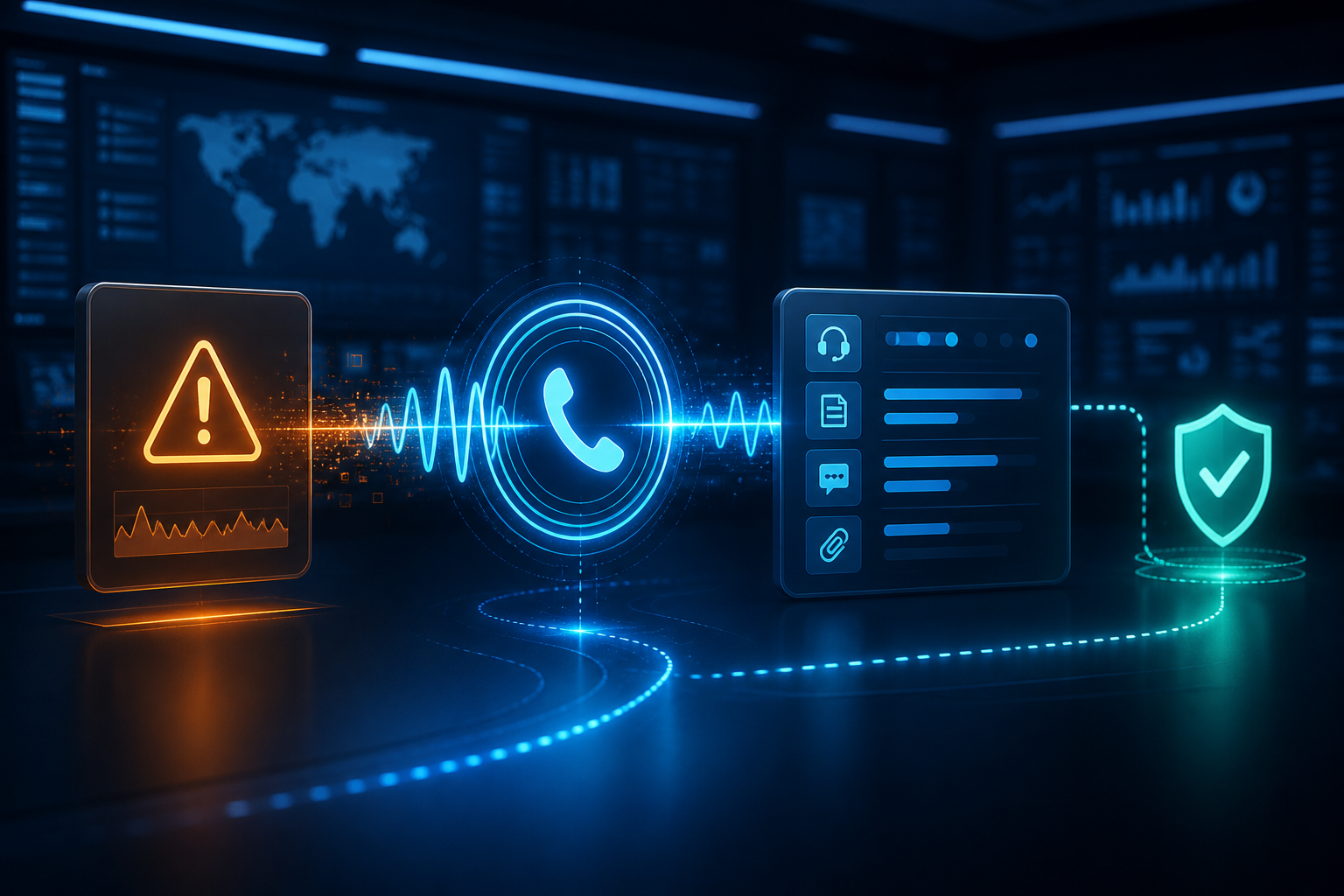
When a SaaS or data dependency fails, an operator often has to stop diagnosing the incident, wait on a support line, repeat context, and manually copy the vendor ticket, status and ETA back into the incident channel. IncidentBridge delegates only that bounded conversation.
An operator loses attention to hold time and repetitive support routing.
The same incident context is re-read to a vendor while the real system is still failing.
Ticket, status, ETA and workaround facts are manually copied back into the response workflow.
CALL-E gathers facts. Local health checks and the human incident commander still decide whether recovery is real.
The upstream review found two substantive blockers. Both were fixed, regression-tested, and the app was merged into the official CALL-E community repository on August 17, 2026.
Privacy validation originally covered only the incident summary. The fix now screens every free-text field that can enter the spoken task for credentials, secrets and personal contact data.
A successful result must now bind to the exact workflow, incident, call ID and authorized destination, then corroborate the returned vendor ticket against recipient transcript evidence. Otherwise it fails closed to needs_human.
The phone call is only one step. Validation, preview, exact authorization, durable dispatch state and evidence corroboration all happen around it.
Reject secrets, contact data in spoken fields, unsupported identifiers and unauthorized recipients before a task exists.
Show the masked destination, exact CALL-E task, strict result schema and idempotency identity with zero phone side effect.
Live mode needs explicit execute intent, recipient authorization and an exact E.164 allowlist match.
Write durable state before dispatch. Ambiguity becomes reconciliation, never a blind second dial.
Bind workflow, incident, call and destination, then require recipient evidence for the ticket. Recovery still remains human-owned.
The console separates public live-provider evidence, a no-call authorization preview, and a deterministic success-path simulation. The labels are explicit so a judge can see what is real, what is previewed, and what is simulated.
Loading evidence…
Successful live-call behavior has also been validated privately through direct testing, packaged external testing, and testing with randomly selected users. Those materials are intentionally not published because they contain real participant and conversation data. A one-shot consented synthetic live-success runner is now included so the full real success boundary can be published without exposing the participant.
The published CALL-E Python SDK is actually imported and called at runtime. The final award-sprint GitHub Actions run verifies lint, 33 regression tests, 93.80% total coverage, and demo-source syntax.
vendor_acknowledged